
PurAire Glass DBD Replacement Ionisation Tubes
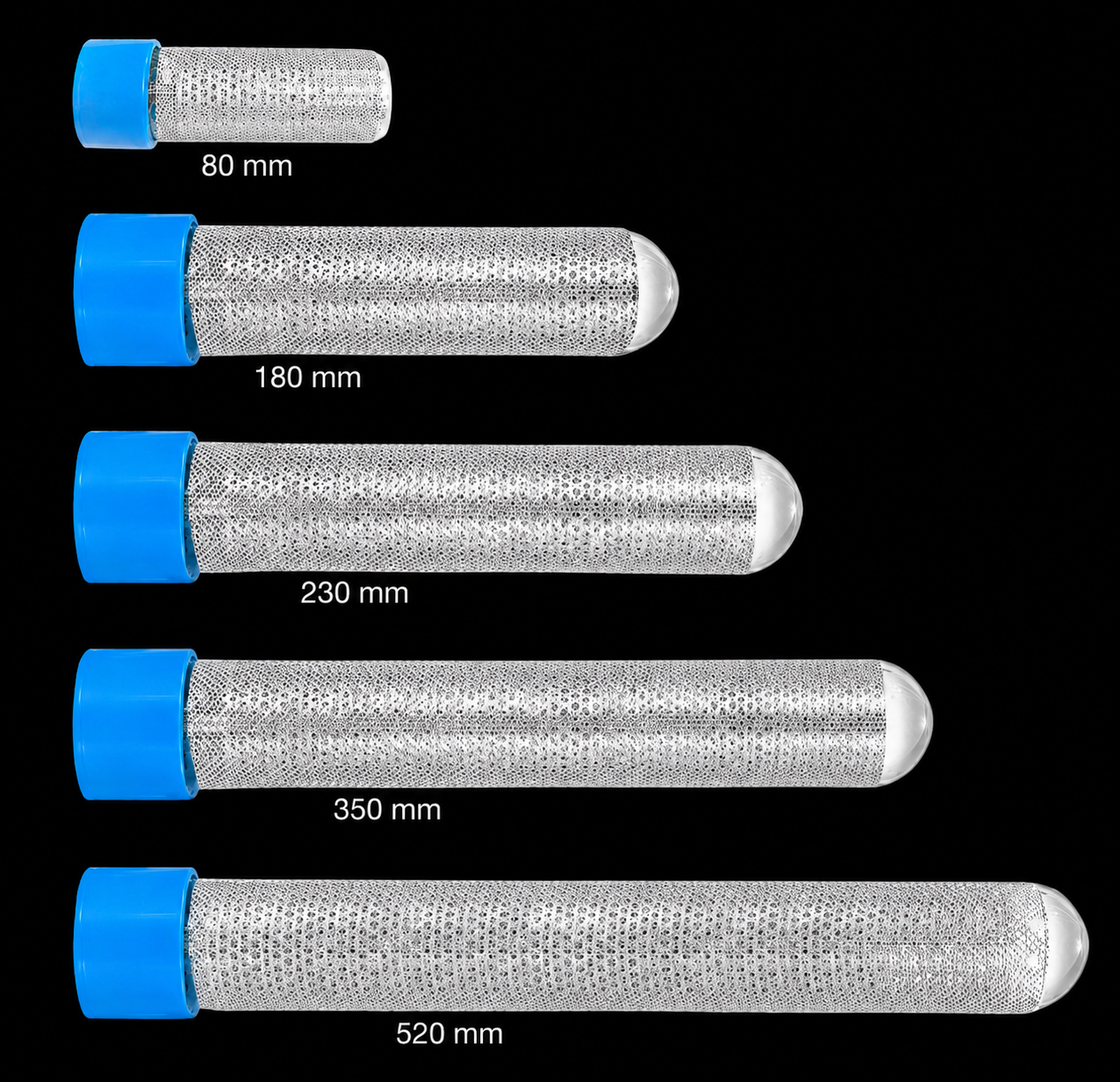
Replacement Tubes for PurAire and Selected Commercial Bipolar Ionisation Systems
PurAire supplies Glass DBD replacement ionisation tubes for maintenance of selected commercial bipolar ionisation systems used in AHUs, supply ducts, fan coil units and other HVAC applications.
Multiple tube lengths are available. Because frame dimensions, connectors and electrical requirements can vary between systems and revisions, PurAire confirms compatibility before supply.
The Glass DBD tubes used in PurAire systems carry an approximate 17,000-operating-hour service-life rating. Replacement timing should be based on actual operating hours, equipment condition and the maintenance requirements of the installed system.
PurAire Replacement Tubes at a Glance
| Product Type | Glass DBD replacement ionisation tubes |
|---|---|
| Primary Use | Maintenance of compatible commercial bipolar ionisation systems |
| Typical Installations | AHUs, supply ducts, fan coil units and other commercial HVAC ionisation equipment |
| Material | Inorganic dielectric glass with external electrode / mesh assembly |
| Available Lengths | 80mm to 520mm |
| Service-Life Rating | Approximately 17,000 operating hours |
| Compatibility | Confirmed by system, tube dimensions, base/connector and electrical requirements |
| Certifications | Replacement tubes themselves should not be described as UL 2998 or UL 867 certified |
| Supply | Singapore and Southeast Asia |
Ionisation Tubes Are a Scheduled Maintenance Component
A Glass DBD tube does not need to fail suddenly before it needs to be replaced. Ionisation equipment is normally maintained according to operating hours, system condition and the manufacturer’s maintenance schedule.
PurAire rates its Glass DBD tubes at approximately 17,000 operating hours.
PurAire’s direct replacement ionisation tubes are priced substantially lower than competing brands.
How Do I Know Which Replacement Tube I Need?
Do not order from an approximate inch description alone. The safest way to confirm a replacement is to identify the installed system and the physical tube assembly.
Send PurAire:
- System manufacturer and model, if known
- A photograph of the complete ionisation unit or frame
- A close photograph of the tube base and electrical connector
- The measured glass-tube length in millimetres
- Any tube or component code printed on the existing part
- The number of tubes required
We will compare the dimensions and connection requirements and confirm whether a PurAire replacement is suitable before quoting.
Why Glass DBD?
Safety - Glass is An Inorganic Dielectric Material
Glass is an inorganic material and does not support combustion in the way an organic material can. In a DBD ionisation tube, the glass acts as the dielectric barrier between the electrical discharge and the surrounding air.
A Defined Discharge Surface
The cylindrical tube provides a discharge surface along the length of the ionisation element. The exact ion output and treatment capacity depend on the complete ioniser design, applied voltage, airflow, tube geometry and operating conditions.
Suitable For Commercial HVAC Environments
Glass DBD tubes are used in PurAire commercial HVAC equipment operating in Singapore’s high-humidity environment. As with any ionisation component, the tube and outer electrode should be kept clean and maintained according to the equipment instructions.
Long Service-Life Rating
PurAire rates our tubes at approximately 17,000 operating hours. This is a service-life rating, not a guarantee that every tube will have identical ion output at every point in its life.
How Does a Glass DBD Ionisation Tube Work?
Bipolar ionisation is an advanced, proactive air purification technology that mimics nature’s cleansing processes, such as the fresh air after a thunderstorm, near a waterfall, or on top of a mountain.
Unlike passive HEPA filters that wait for pollutants to pass through them, PurAire’s system releases billions of positively and negatively charged oxygen ions into your space to neutralize contaminants in the air and on surfaces.
DBD stands for dielectric barrier discharge. A high-voltage electrical field is applied across the glass dielectric barrier, creating a non-thermal plasma discharge near the tube surface.
The discharge ionises the Oxygen molecules in the surrounding air and creates positively and negatively charged Oxygen ions that are then dispersed throughout the room by the Aircon or Fan Coils airflow.
Maintenance
Tube-cleaning and replacement procedures should follow the instructions for the installed ionisation equipment. The entire proce3ss is designed to be user friendly – you don’t need to pay us to do it!
Before cleaning or replacing a tube, isolate electrical power (turn it off) and allow the equipment to discharge according to the manufacturer’s service procedure. Do not handle or service high-voltage ionisation equipment while energised.
Remove the tube from the unit by unscrewing it. Wash it under warm water with a mild soap. Rinse thoroughly and dry completely. Then reinstall the tube. It’s that simple.
Just make sure the glass and electrode assembly are completely dry before the system is returned to service.
Why Glass DBD Outperforms Needlepoint Ionisation
Facilities managers often ask whether Needlepoint Bipolar Ionisation (NPT) is the newer or better option compared with Glass DBD tubes. We’ve installed and measured both across Singapore, and the difference comes down to the emitter itself.
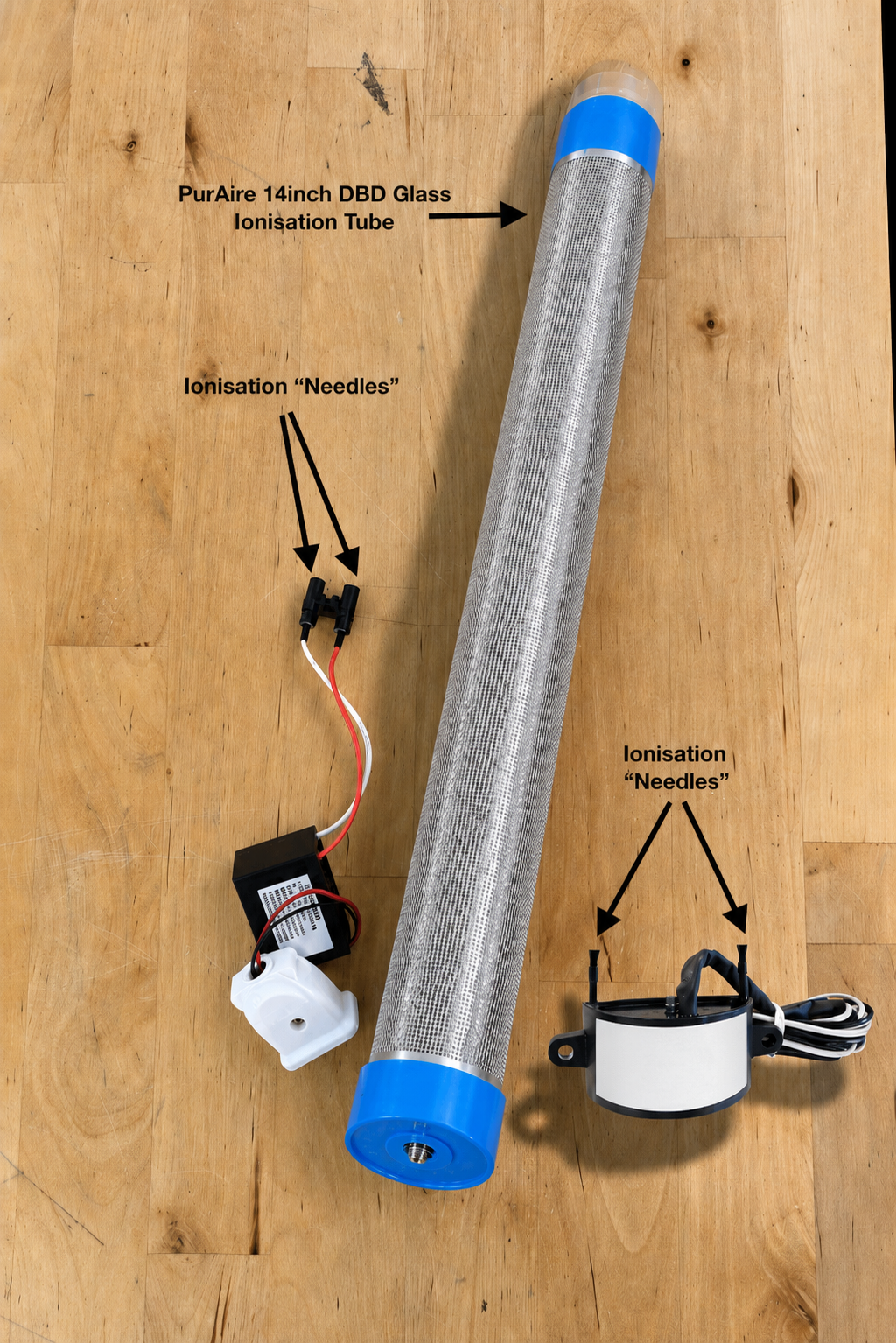
A PurAire Glass DBD tube has a 14-inch dielectric barrier surface, and ionisation happens along the full length of that glass.
A needlepoint emitter concentrates its discharge at the needle tips, which is a much smaller active area. That difference in emitting surface is the reason a single DBD tube produces the ion output it does, and it’s why the tube — not the housing, not the power supply — is the component that determines how the unit performs.
PurAire’s Glass DBD transformer weighs over 1 kilogram. A typical needlepoint transformer weighs approximately 200 grams. That five-to-one difference in transformer mass directly reflects the power available for ion generation — and the energy level of the ions produced.
Frequently Asked Questions
They fit selected commercial Glass DBD bipolar ionisation systems. Compatibility should be confirmed from the system model, tube dimensions, base/connector and electrical requirements before ordering. Send us photographs and measurements and we will check.
To maintain indoor air quality, tubes should be replaced every 17,000 operational hours (approx. 2 years). Beyond this point, ion output drops significantly, reducing the system’s ability to kill mould and viruses.
No. PurAire tubes are high-quality, certified components that meet or exceed OEM specifications. Using them is standard professional maintenance, similar to using high-quality third-party filters in an HVAC system.
PurAire uses the same Glass DBD tube family across a range of its own ionisation systems, with tube length and quantity selected for the particular product. Confirm the exact replacement size before ordering.
Yes. PurAire supplies customers in Singapore and worldwide. Send the model of the ioniser, destination, tube requirement and quantity and we will confirm availability, shipping and lead time.
Replace the Tube — Not the Entire Ionisation System
Tell us your ionisation system make and model, the tube length and base/connector type, and how many units you need. Photos of the existing tube and the equipment label help us confirm the match quickly.
We will verify compatibility, advise on replacement intervals and provide a quotation.
PurAire Singapore, a division of ProMedUSA Pte Ltd
Office: +65 6836 9665
WhatsApp: +65 9456 8313